Walking the Mourne Mountains
Northern Ireland’s highest mountains sit ninety minutes from the city. Bring boots and a plan B for weather.
The short version
- The 237 bus runs hourly from Belfast’s Europa Buscentre to Newcastle, the town at the foot of the mountains, in about an hour and 25 minutes — times at translink.co.uk.
- The classic day is Slieve Donard from Donard Park: 9 km round trip up the Glen River, four to five hours, 850 m of granite, and the Mourne Wall to steer by at the top.
- Tollymore Forest Park, two miles inland, is the gentler alternative — river paths, stone bridges, and Gothic follies under old trees; route notes at walkni.com.
- Mountain weather cancels views without notice. Check the forecast the morning you go, pack a waterproof whatever the sky says, and turn back if cloud drops onto the wall.
- Newcastle handles the after-hike: fish and chips on the promenade, a pint on Main Street, and the bus home from the station you arrived at.

Getting there
The 237 leaves Belfast’s Europa Buscentre hourly and reaches Newcastle bus station in about an hour and 25 minutes. From the station, walk the promenade to Donard Park in ten minutes — the trailhead starts at the back of the car park. Drivers take the A24 south in about fifty minutes. For Tollymore instead, stay on the bus to the Bryansford Road stops or take a short taxi from Newcastle.
The day
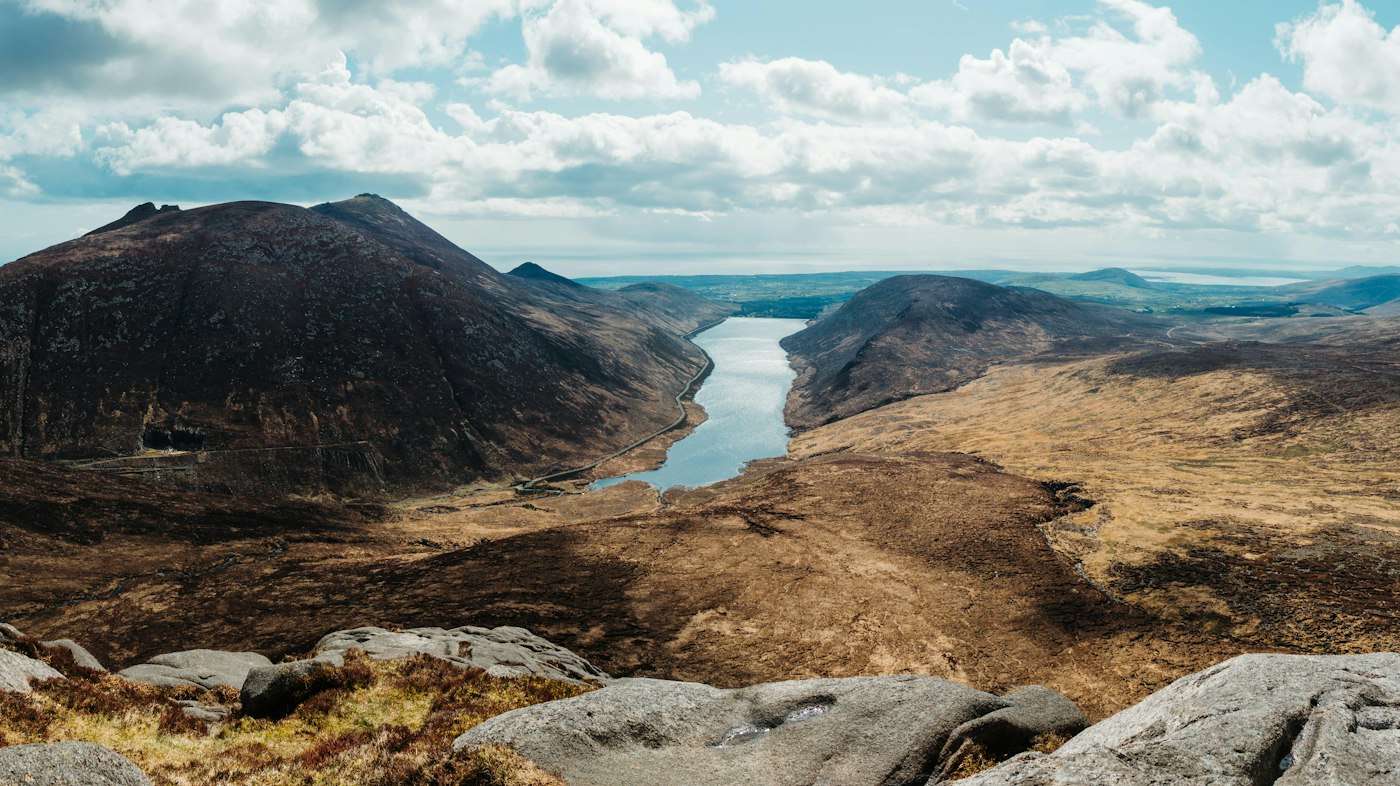
The Glen River route is the mountain done properly: woodland of oak and Scots pine, three bridges over the river, then open slope to the saddle. The Mourne Wall meets you there — 35 km of dry stone laid between 1904 and 1922 to enclose the reservoir catchment — and the final steep stretch follows it straight to the summit shelter at 850 m. On the clearest days the view takes in the Isle of Man and the Scottish coast. Walkers who want trees instead of summits get a full day in Tollymore Forest Park, whose riverside paths and stone follies have stood in for on-screen forests more than once. Silent Valley, the reservoir the wall protects, is reachable by car for a flatter, quieter walk.
When to go
May through September brings the daylight and the driest trails; the climb runs year-round for the properly equipped, and winter summits are for experienced hillwalkers only. Midweek is quiet. Whatever the month, the mountains make their own weather — the forecast on the morning itself is the one that counts.
Frequently Asked Questions
Can you do the Mourne Mountains from Belfast without a car?
Yes. The 237 bus runs hourly from Europa Buscentre to Newcastle in about an hour and 25 minutes, and the Slieve Donard trailhead at Donard Park is a ten-minute walk from Newcastle bus station.
How hard is the Slieve Donard climb?
Moderate to strenuous: about 9 km round trip, 850 m of ascent, four to five hours at a steady pace. The upper third is steep and stony, and proper footwear matters more than fitness.
What is the Mourne Wall?
A 35 km dry-stone wall built between 1904 and 1922 to enclose the Silent Valley water catchment. It crosses fifteen summits, and its junction on Donard guides the final stretch of the climb.
Is Tollymore Forest Park worth it if you skip the summit?
Yes. Flat-to-rolling forest paths follow the Shimna River past stone bridges and follies, there is a small entry fee, and it fills a half day without any of the mountain’s exposure.
What should you bring?
Waterproof jacket, water, food, and a charged phone with an offline map. There are no shops past Newcastle, and phone signal fades in the valleys.