Belfast Day Tours
I’m Serious Day Tour Man AI, your day trip expert. Ask me anything — where to go, how to get there, and what’s actually worth your day.
Belfast’s day trips run one of Europe’s great coastal drives to a UNESCO site with a fact most visitors never learn: the famous stones are free, by a right of way a court confirmed in 1897, and the ticket price everyone assumes is mandatory buys the parking and the visitor center. The mechanics are below.
Two register notes. The city and Derry carry the history of the Troubles, and those sites call for the sober visit — guided, unhurried, and taken as living memory rather than backdrop. And one long-running film franchise has scattered its locations across this coast; the page treats them as the cheerful add-ons they are.
Here’s what’s worth a day, with real times and honest trade-offs.

Popular Day Trips

Giant’s Causeway
The Free Stones, the Ticket That Isn’t Entry
Derry
The Waterside Train, the Complete Walls
The Causeway Coast — The Free Stones and the Paid Experience
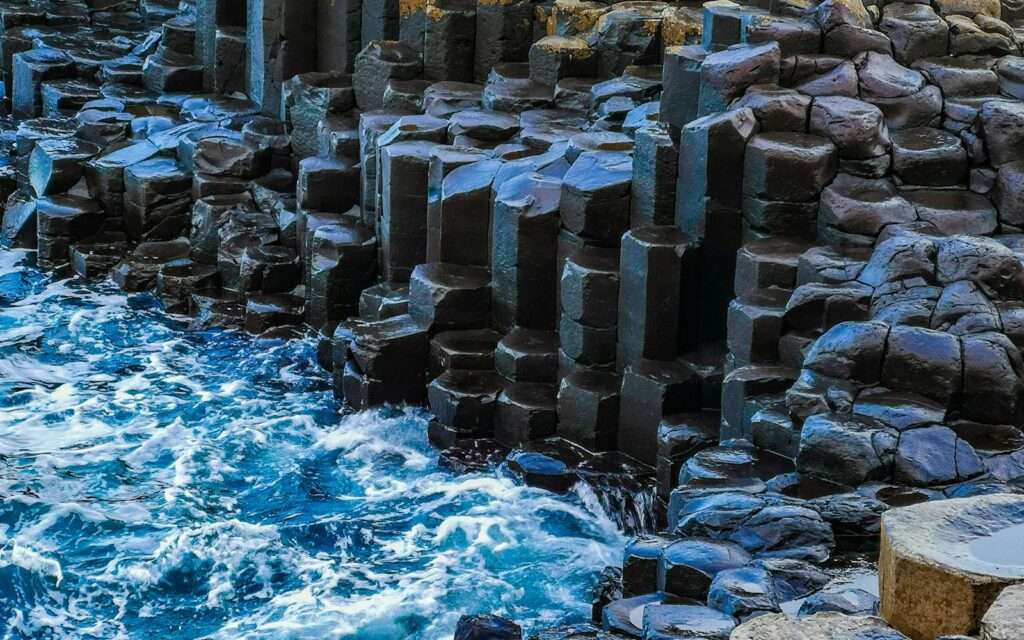
Ninety minutes north (or two-and-a-half by the coastal route, which is the better answer), the Giant’s Causeway is Northern Ireland’s UNESCO headliner: 40,000 basalt columns stepping into the Atlantic. The mechanics matter: access to the stones themselves is free, around the clock, on a public right of way local people won in the Dublin High Court in 1897. What the ticket buys is the Visitor Experience — reserved parking, the exhibition, guided tours, and audio guides — and it is good, but it is optional, and the pricing signs don’t advertise that. The formats: pre-book the Experience online for the best rates (early and late slots run cheaper in July–August), or park at the Bushmills Park and Ride and take the bus, or arrive by Translink and walk in free. The stones at golden hour, after the coaches leave, are the version to want. Wear real shoes; the columns are uneven and the wind is Atlantic.
The coast stacks around it: Carrick-a-Rede rope bridge — the fishermen’s crossing to its island, thirty meters over the sea — runs on National Trust timed tickets that sell out in season, so book ahead. Dunluce Castle’s ruin hangs off its cliff, the Old Bushmills Distillery pours the tour at the source, and the Dark Hedges’ beech tunnel handles the franchise photo stop. The full stack in one day is possible and rushed; Causeway plus two others is the sane allocation.
Read the full Giant’s Causeway day-trip page.
Derry — The Walls and the Peace Bridge
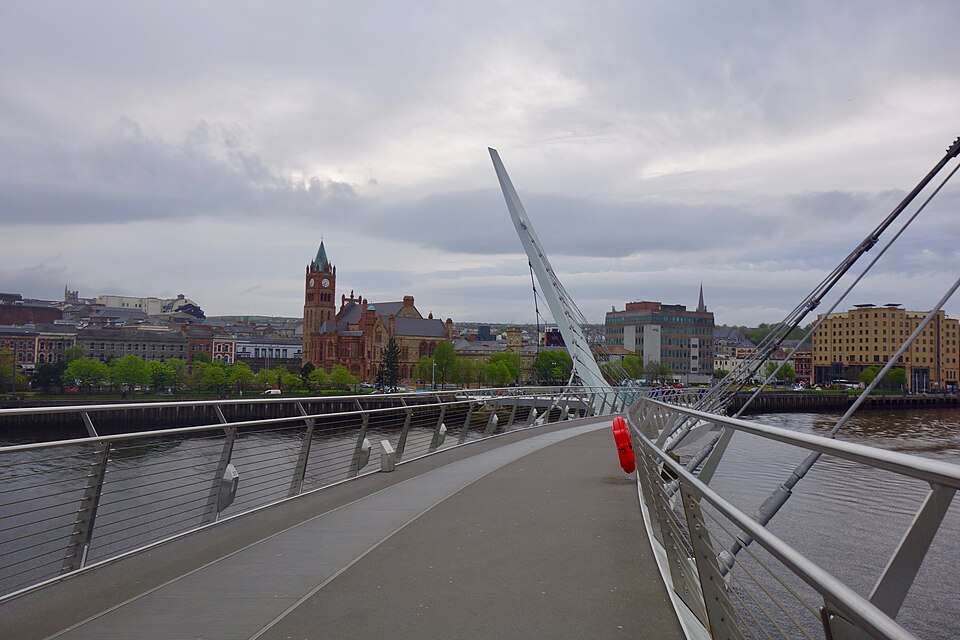
Ninety minutes northwest, Derry — also officially Londonderry; the dual name is part of the story — holds Ireland’s only completely intact city walls: a mile-long seventeenth-century circuit, walkable in full, reading the whole city from above. The walls themselves are free, and a guided walking tour is the difference between seeing ramparts and understanding them — the city’s guides, from all traditions, are among the best anywhere.
The recent history gets its sober hour: the Bogside below the walls holds the People’s Gallery murals and the Museum of Free Derry, which documents Bloody Sunday and the civil rights era with community authority — visited unhurried, guided where possible, and paired with nothing flippant. The Peace Bridge, the S-curved footbridge across the Foyle, carries the counterweight: built to connect the city’s two banks and communities, and now its favorite stroll.
The lighter layers: the Guildhall’s stained glass, the Craft Village’s courtyard cafés, and the walls’ cannon — including Roaring Meg — for the siege history. The train from Belfast along the coast past Castlerock is routinely called one of the finest rail journeys in these islands, which makes the car optional. Halloween here is Europe’s biggest festival of its kind — attend deliberately or reschedule.
Read the full Derry day-trip page.
The Mournes & Down — The Granite South
An hour south, the Mourne Mountains rise straight from the sea — the compact granite range that reportedly sketched Narnia in C.S. Lewis’s head — and Newcastle, at their foot, is the base town. The headline walk is Slieve Donard, Northern Ireland’s highest peak: a steady five-to-six-hour round trip from Donard Park, following the Glen River to the saddle and up beside the Mourne Wall — the 22-mile dry-stone wall that crosses fifteen summits and remains the range’s most improbable artifact. The summit reads the sea, the range, and on clear days the Isle of Man.
The gentler versions: Tollymore Forest Park’s stone follies, river bridges, and redwood avenues (another franchise location, taken in stride) suit every fitness level, and Castlewellan’s lake and peace maze add the family hour. Murlough’s dune boardwalks handle the flat coastal walk.
The stack: Downpatrick’s cathedral hill holds Saint Patrick’s traditional grave — the granite slab under the yews — and the saint’s story told properly at its center; Dundrum Castle’s ruin adds the free panorama. Newcastle’s front supplies the fish and chips. This is the walking day; boots and waterproofs are the equipment, and the mountain weather changes faster than the forecast.
Strangford Lough — The Big-House Day
Forty minutes southeast, Strangford Lough is the UK’s largest sea inlet — island-scattered, bird-rich, and ringed by the gentlest day out on this list. Mount Stewart, on the eastern shore, is the headliner: the National Trust house whose gardens rank among the finest on these islands — the Italianate terraces with their dodo and dinosaur statuary are the signature — and whose interiors carry real political history lightly. Book the house slot on arrival; the gardens absorb hours.
The lough circuit: Grey Abbey’s Cistercian ruin and the village’s antique shops, the Portaferry–Strangford car ferry stitching the narrows (eight minutes, runs constantly, and the crossing is the attraction), and Castle Ward on the western shore — the eccentric house that is Gothic on one facade and classical on the other because the couple who built it never agreed, plus the farmyard that played Winterfell for the franchise faithful, archery experiences included.
The wildlife layer: the lough hosts most of the world’s light-bellied brent geese in autumn, seals haul out year-round, and Exploris in Portaferry covers the aquarium hour. This is the unhurried, garden-and-ferry day — the right choice for mixed-energy groups and the wrong one for adrenaline.
The Gobbins & the Glens — The Cliff Path Day
Forty minutes northeast begins the closest dramatic coast: the Gobbins, the Edwardian cliff path rebuilt into its tubular bridges and hewn steps along the basalt face at Islandmagee — waves below the walkways, guillemots and razorbills in season. The mechanics are strict: access is by guided tour only, booked ahead online, with a genuine fitness-and-footwear check (the path climbs and descends hard), a minimum height for children, and weather cancellations that are common enough to plan slack around. It runs two-and-a-half hours and is worth every step.
North from there, the nine Glens of Antrim open off the coast road: Glenariff — “queen of the glens” — holds the waterfall boardwalk trail through its gorge, the day’s best ninety-minute walk. Cushendun’s Cornish-style cottages and its caves (franchise location, again taken in stride), Carnlough’s limestone harbor, and Glenarm’s castle walled garden string the drive.
This is the flexible day — the Gobbins as the booked centerpiece with glens around it, or the glens alone as the unbooked wander. The coast road itself, Larne to Cushendun, is the underrated half of the famous route, and doing it slowly is the point.
Titanic, the Murals & Belfast Itself
Titanic Belfast first: the aluminum-clad museum on the slipways where the ship was built is the city’s headline ticket and lives up to it — book a timed slot online, allow three hours, and the included SS Nomadic (the last White Star vessel) finishes the story. The slipways themselves, marked at full scale, land harder than any gallery.
The Troubles history, handled properly: the political murals of the Falls and Shankill roads and the peace walls between them are best visited with a black-cab tour — local drivers from the communities themselves, telling the history with balance and directness — or a guided walking tour with the same standard. Ask who guides; the good operators answer proudly. The gates in the peace walls still close at night, which tells visitors what a museum couldn’t. Take it unhurried, photograph respectfully, and pair it with nothing flippant. Crumlin Road Gaol’s tours add the institutional history.
The rest: St George’s Market (Friday–Sunday) for the food-and-crafts morning under Victorian iron, the Cathedral Quarter’s Duke of York alley and the Sunflower’s honest pints, City Hall’s free tours, and Cave Hill’s climb to Napoleon’s Nose — the profile that reputedly gave Swift his sleeping giant — for the city panorama. Eat the Ulster fry once, properly. Season math: May, June, and September are the windows, July’s marching season is a local reality visitors should schedule with awareness of, and the coast is at its theatrical best in shoulder-season weather — bring waterproofs and expect four seasons before lunch.
Frequently Asked Questions
Do you have to pay for the Giant’s Causeway?
No — the stones are free, 24/7, by a public right of way confirmed in court in 1897. The ticket buys the Visitor Experience: parking, exhibition, guided tour, audio guide. Pre-book online for best rates, or use the Bushmills Park and Ride.
Do you need to book Carrick-a-Rede?
Yes — the rope bridge runs on National Trust timed tickets that sell out in season. Book online ahead, wear real shoes, and expect wind-driven closures on rough days.
How should you visit the Belfast murals?
With a black-cab or guided walking tour led by people from the communities — balanced, direct, and unhurried. Ask who guides. The peace-wall gates still close at night; treat the whole visit with that weight.
Is Derry worth a day trip from Belfast?
Yes — the only fully intact walls in Ireland, the Bogside’s civil-rights history told with community authority, and the Peace Bridge. Take the coastal train, routinely rated among the finest rail rides in these islands.
What are the Gobbins rules?
Guided tours only, booked ahead — a strenuous cliff path with a footwear check, a child height minimum, and frequent weather cancellations. Two and a half hours of bridges and hewn steps over the Atlantic, and worth planning slack for.